
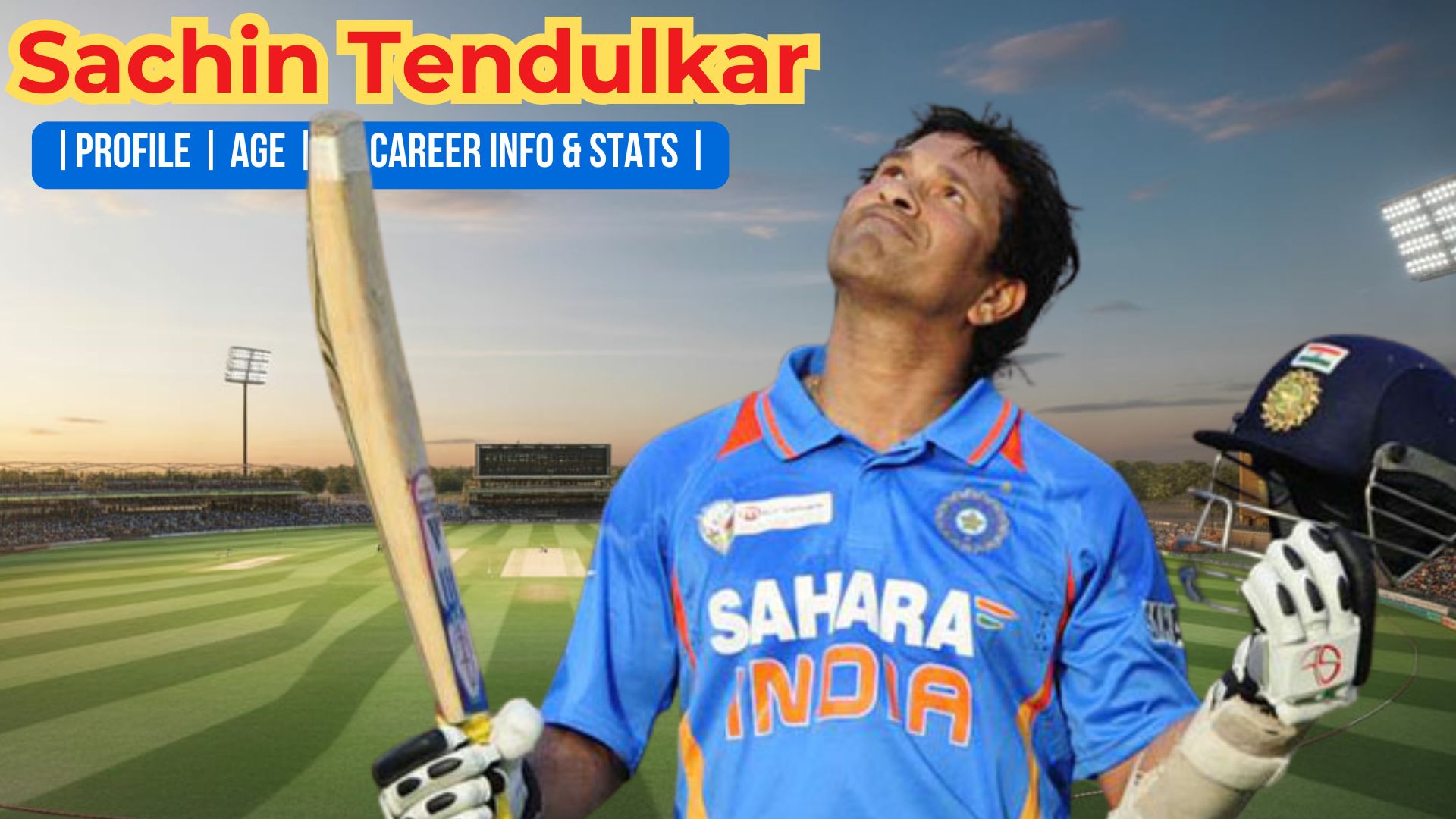
Sachin Tendulkar Profile, Career & Stats — The Complete Journey of Cricket’s Greatest Icon
When cricket fans worldwide discuss the greatest batsman of all time, one name dominates every conversation Sachin Tendulkar. The God of Cricket legacy stretches across 24 glorious years, rewriting record books and inspiring billions.
His journey from Mumbai’s dusty cricket grounds to becoming a global cricket icon represents dedication meeting destiny. This comprehensive Sachin Tendulkar biography explores the Master Blaster Sachin Tendulkar‘s life, career milestones, and enduring impact on cricket history.
Early Life and Background
Sachin Tendulkar’s early life began on April 24, 1973, in Mumbai’s middle-class Bandra East neighborhood, where dreams took root on cricket pitches rather than in classrooms. His father Ramesh Tendulkar worked as a Marathi novelist and professor, while his mother Rajni worked in the insurance industry.
Sachin Tendulkar’s childhood revolved around cricket from age eleven when elder brother Ajit recognized raw talent and took him to Sachin Tendulkar coach Ramakant Achrekar at Shivaji Park. The young prodigy’s life changed forever at Sachin Tendulkar school Sharadashram Vidyamandir where Achrekar molded him through rigorous training sessions that often lasted six hours daily.
Sachin Tendulkar education took a backseat as cricket consumed his teenage years, yet the discipline learned through academics translated into cricketing discipline on the field. At just fourteen, the Mumbai cricket prodigy was selected for Mumbai’s Ranji Trophy squad, becoming the youngest player to represent the state.
His partnership with childhood friend Vinod Kambli produced a legendary 664-run stand in school cricket (1988), signaling the arrival of someone special. The Sachin Tendulkar profile was already taking the shape a boy with exceptional hand-eye coordination, unmatched consistency, and an insatiable hunger for runs.
Key Early Life Facts:
- Born: April 24, 1973, Mumbai
- Named after: Legendary musician Sachin Dev Burman
- First coach: Ramakant Achrekar (1984-1989)
- School record: 664-run partnership with Vinod Kambli
- Ranji debut age: 14 years old
Personal Life
Sachin Tendulkar’s personal life remained remarkably private despite astronomical fame, centered around his marriage to childhood friend Anjali Mehta in 1995. Sachin Tendulkar wife Anjali, a pediatrician by profession, sacrificed her medical career to support her husband’s demanding cricket schedule.
Their partnership exemplified sportsmanship values extending beyond the cricket field into family life. The couple welcomed Sachin Tendulkar daughter Sara in 1997, followed by Sachin Tendulkar son Arjun in 1999, both raised away from excessive media spotlight despite their father’s status as Indian cricket legend.
Sachin Tendulkar family maintained normalcy amidst chaos, with Anjali managing household affairs while Sachin pursued cricketing excellence. Arjun Tendulkar later pursued professional cricket himself, representing Mumbai in domestic tournaments, though carrying the weight of his legendary surname. Sara chose a different path, focusing on medical studies like her mother.
The Sachin Tendulkar age-defying performances into his late thirties owed much to family stability Anjali’s understanding allowed him to dedicate himself completely to cricket. Close friendships with Sourav Ganguly, Vinod Kambli, and Harbhajan Singh provided emotional anchors throughout his career’s ups and downs.
Family Overview:
| Relationship | Name | Details |
| Wife | Anjali Tendulkar (née Mehta) | Pediatrician, married 1995 |
| Daughter | Sara Tendulkar | Born 1997, pursuing medical field |
| Son | Arjun Tendulkar | Born 1999, professional cricketer |
| Father | Ramesh Tendulkar | Marathi novelist and professor |
| Mother | Rajni Tendulkar | Insurance professional |
Playing Style
Sachin Tendulkar’s batting philosophy centered on textbook technique merged with innovative shot-making, establishing him as the benchmark for modern batsmen. Perfect balance, economy of movement, and precision in stroke execution formed his foundation.
His iconic cover drive became cricket’s most photographed shot weight transferred perfectly onto the front foot, bat coming through straight as an arrow. The straight drive perfection he displayed against the world’s fastest bowlers showcased batting technique mastery rarely witnessed. What separated him from peers was anticipation that unmatched batting legacy came from reading bowlers’ intentions before delivery left their hands.
Sachin Tendulkar’s career highlights included mastering every format and condition imaginable. His spin playing ability on turning Asian pitches was matched by fast bowling dominance on bouncy Australian tracks. The back-foot punch through covers became his signature against pace, while using his feet to spinners displayed mental toughness in cricket‘s most pressure-filled situations.
At just 5’5″, he handled short-pitched bowling fearlessly, revolutionizing how batsmen of shorter stature approached pace bowling. His batting consistency across formats from five-day Tests to high-octane T20s proved his adaptability and timeless cricketing hero status.
Playing Style Characteristics:
- Stance: Slightly open, perfect balance
- Strengths: Cover drive, straight drive, pull shot, cut shot
- Weakness: Virtually none; consistent across all conditions
- Signature shot: Straight drive and cover drive
- Adaptability: Equally effective against pace and spin
Early Career
Sachin Tendulkar’s debut match against Pakistan at Karachi’s National Stadium (November 15, 1989) introduced a sixteen-year-old boy to international cricket’s brutal realities. Facing Waqar Younis, Wasim Akram, and Imran Khan arguably the most fearsome pace attack of that era young Sachin displayed courage beyond his years.
A blow to the face from Waqar that bloodied his nose couldn’t stop him from continuing his innings, foreshadowing the resilience through injuries that would define his career. Though he scored just 15 runs in that debut, cricket experts recognized special talent. Sachin Tendulkar’s first century arrived at Manchester’s Old Trafford against England in 1990, a match-saving 119 not out that announced his arrival on the world stage at age seventeen.
| Year | Event | Achievement | Age |
| 1989 | Test Debut | Pakistan vs India, Karachi | 16 |
| 1989 | ODI Debut | Pakistan vs India, Gujranwala | 16 |
| 1990 | First Test Century | 119* vs England, Old Trafford | 17 |
| 1994 | First ODI Century | 110 vs Australia, Colombo | 21 |
| 1996 | World Cup Breakthrough | 523 runs, highest scorer | 22 |
| 1998 | Desert Storm Innings | 143 vs Australia, Sharjah | 25 |
| 1999 | World Cup Campaign | Playing through father’s death | 26 |
Early Years (1989–1996)
The foundation of Sachin Tendulkar’s ODI career and Sachin Tendulkar’s Test career was laid during these formative years when he transformed from talented teenager into world-class performer. By 1996, before turning twenty-three, he’d accumulated fifteen Test centuries a feat unmatched in cricket history. His technique evolved rapidly, adapting to different bowling attacks and conditions.
The longevity in international cricket began here, with his body and mind developing the durability needed for a 24-year career. Playing through pressure situations taught him big match temperament, evident when India needed him most against quality opposition.
Rise Through the Ranks
1994–96: ODI Matches
Sachin Tendulkar’s first century in ODIs came surprisingly late his 79th match against Australia in Colombo (1994). Once that barrier broke, the floodgates opened. He transformed from middle-order accumulator to destructive opener, revolutionizing one-day cricket’s approach during powerplays.
The 1996 World Cup showcased this evolution brilliantly 523 runs including memorable centuries against Kenya and Pakistan established him as the tournament’s leading run-scorer. His aggressive intent in India’s quarterfinal victory against Pakistan at Bangalore’s Chinnaswamy Stadium remains etched in cricket folklore. Though India lost the semifinal to eventual champions Sri Lanka, Sachin Tendulkar’s career trajectory pointed firmly upward.
1998: Australian Competition
The April 1998 Sharjah series produced legendary innings that elevated Sachin to mythical status. His back-to-back centuries (143 and 134) against Australia in desert sandstorm conditions became known as the “Desert Storm” innings. These master blaster moments featured audacious stroke-play against Shane Warne and Glenn McGrath at their peak.
The historic centuries came when India needed them desperately losing both matches would’ve ended tournament hopes. Instead, Sachin single-handedly dragged his team to the final with breathtaking hitting. Warne later admitted those innings haunted him, calling Sachin the toughest batsman he’d ever bowled to. This series exemplified pressure match performances and cemented his reputation for delivering when stakes were highest.
1999: Asian Test Championship, Test Matches, and the World Cup
Personal tragedy struck during the 1999 World Cup when Sachin Tendulkar’s father Ramesh passed away mid-tournament. He flew home for the funeral, then returned within days to score a century against Kenya an inspirational journey of a champion displaying strength beyond cricket.
The Asian Test Championship earlier that year saw dominant performances against Pakistan and Sri Lanka, further building his Test cricket reputation. Though the World Cup ended disappointingly in the Super Six stage, his dedication earned global respect. These experiences taught him handling adversity, contributing to the mental toughness in cricket that later defined career-saving performances.
Captaincy of National Team
South Africa Match Fixing
Sachin Tendulkar’s captaincy record began during cricket’s darkest period the match-fixing scandal that rocked Indian cricket in 2000. He inherited a team with shattered morale and public trust in freefall. His clean image and impeccable fair play image helped restore credibility when fans questioned every decision.
Though his leadership tenure lasted just 25 Tests, the Sachin Tendulkar match fixing controversy context showed him as cricket’s moral compass, untouched by corruption. He prioritized team rebuilding over personal glory, though the captaincy burden clearly affected his batting averages. Recognizing leadership wasn’t his strength, Sachin resigned in 2000 to focus on what he did best scoring runs.
Role in 2007 Captaincy Change
Senior statesman Sachin played crucial roles during India’s leadership transitions, particularly the 2007 Greg Chappell-Sourav Ganguly controversy. His support for Rahul Dravid’s captaincy during that turbulent period demonstrated leadership influence beyond official titles.
After the disastrous 2007 World Cup, when Dravid resigned, Sachin backed MS Dhoni’s appointment despite being senior. This role model for young cricketers behavior showed he valued team success over ego. His mentorship helped Dhoni transition into captaincy that eventually brought the 2011 World Cup home. The sportsmanship values displayed during these transitions enhanced his stature as true ambassador of cricket.
Continued Rise
Sachin Tendulkar’s achievements during 2001-2004 represented his peak years, producing performances that rank among cricketing history legend status. The period saw him break major records while delivering match-winning innings across formats. His consistency reached unprecedented levels scoring Test runs at will while maintaining ODI strike rates that terrorized bowling attacks.
These were the golden era of Indian cricket years when Sachin led from the front, inspiring a generation of cricketers including Virat Kohli, Rohit Sharma, and MS Dhoni. The symbol of Indian cricket pride reached his zenith, transcending sports to become a cultural phenomenon.
| Series/Event | Runs | Average | Notable Innings | Opposition |
| 2001 vs Australia (Tests) | 401 | 57.28 | 126 (Chennai), 155* (Chennai) | Australia |
| 2002 vs West Indies | 403 | 201.50 | 176 (Kolkata) | West Indies |
| 2003 World Cup | 673 | 61.18 | 98 vs Pakistan, 152 vs Namibia | Multiple |
| 2003-04 Australia Tour | 257 | 36.71 | 241* (Sydney) | Australia |
2001–02: Mike Denness Incident, Australia Test Series, and Breaking Bradman’s Record
The Mike Denness ball-tampering controversy threatened to derail the 2001 home series against Australia, but Sachin’s leadership and performances rose above politics. His twin centuries at Chennai on a raging turner showcased spin playing ability at its finest 126 and 155 not out batting on day five against Shane Warne.
These innings helped India to a famous series victory, ending Australia’s 16-Test winning streak. In October 2001, he surpassed Don Bradman’s 29 Test centuries, entering rarified air of cricketing greatness. The rivalry with Australia intensified, with Sachin consistently delivering his best against cricket’s most dominant team of that era.
2003: Cricket World Cup
Sachin Tendulkar’s 2003 World Cup campaign earned him Player of the Tournament 2003 honors with 673 runs at 61.18 average. Every innings was a masterclass his 98 against Pakistan at Centurion featured the famous upper-cut six off Shoaib Akhtar that became an iconic moment. The 152 against Namibia, 97 against Sri Lanka, and consistent fifties displayed batting consistency across formats and unmatched consistency under pressure.
India reached the final, losing to Australia’s all-conquering side despite Sachin’s brilliance. This tournament cemented his status as the World Cup hero whose individual performances could single-handedly win matches. Critics argue he produced the greatest World Cup performance by a batsman, even in defeat.
2003–04: Tour of Australia
The Sydney Test produced Sachin’s highest Test score a monumental 241 not out that showcased longevity in international cricket and mental toughness. Batting nearly eleven hours, he deconstructed one of cricket’s finest bowling attacks on their home turf. This legendary innings featured every shot in cricket’s textbook cuts, pulls, drives, and delicate placements.
Despite India losing the series 1-2, his success in South Africa tours (wrong reference should be Australia) proved he thrived in challenging overseas conditions. Australian legends including Steve Waugh and Ricky Ponting acknowledged him as the greatest visiting batsman they’d faced. The innings represented peak performance years and cricketing excellence standards few have matched.
Comeback Phase (2005–2008)
The period between 2005-2008 tested Sachin Tendulkar’s character when injuries and form slumps raised retirement questions. Tennis elbow plagued him through 2005-06, forcing technical adjustments to compensate for physical limitations. The resilience through injuries displayed during this phase added another dimension to his legacy.
Critics questioned whether age thirty-three marked career decline, yet he silenced doubters through sheer determination. These comeback performances showcased the discipline in sports career that separated legends from merely great players. By 2008, he’d emerged stronger, breaking records and reminding the world why he remained the benchmark for modern batsmen.
| Year | Format | Matches | Runs | Average | Centuries | Key Milestone |
| 2005 | Tests | 6 | 338 | 33.80 | 0 | Lean patch |
| 2006 | Tests | 10 | 803 | 50.18 | 3 | Return to form |
| 2007 | Tests | 12 | 776 | 38.80 | 4 | World Cup struggles |
| 2008 | Tests | 15 | 1063 | 47.40 | 4 | Surpassed Brian Lara |
2005–06: Dry Spell
The first time since his 1989 debut, Sachin went an entire calendar year (2006) without scoring a Test century. Physical ailments combined with technical adjustments created unprecedented struggles. The mental toughness in cricket required to overcome such adversity at age thirty-three demonstrated why he’s considered the greatest batsman of all time.
Rather than retiring, he worked tirelessly with trainers and coaches to modify his game. The Indian sports icon refused to let injury define his career’s final chapter, exemplifying excellence in technique and temperament that inspired millions facing their own setbacks.
2007 Cricket World Cup
India’s group-stage exit at the 2007 Cricket World Cup represented Sachin’s lowest professional moment. Scoring just seven runs against Bangladesh in the crucial defeat crushed him visibly. The God of Cricket seemed mortal for perhaps the first time. Yet this failure planted seeds for future redemption. Rather than dwelling on disappointment, he used it as motivation for the 2011 campaign.
The experience taught younger teammates about handling pressure and bouncing back from adversity. His leadership influence during this dark period helped India rebuild for future success, demonstrating true ambassador of cricket values transcending personal statistics.
2007–08: Tour of Australia
Redemption arrived quickly during the 2007-08 Australia tour, where Sachin scored 154 not out at Sydney in the controversial “Monkeygate” series. Despite the series being marred by poor umpiring and racial tensions, his batting spoke louder than controversies. The vintage form against Brett Lee, Stuart Clark, and Mitchell Johnson on bouncy Australian pitches proved fitness concerns premature.
His dominance against Pakistan and Australia throughout his career produced some of cricket’s most memorable contests. This tour showcased comeback performances that silenced critics questioning his place in the team, reasserting his status as respected cricket ambassador.
2008: Return to Tests and Breaking Brian Lara’s Record
October 17, 2008, at Mohali Sachin Tendulkar surpassed Brian Lara’s 11,953 Test runs to become cricket’s highest run scorer in international cricket (Tests). The emotional milestone came against Australia, fitting given their rivalry produced his best cricket.
Lara himself congratulated Sachin, acknowledging the Master Blaster’s superior longevity and consistency. This record eventually stretched to 15,921 runs before retirement in 2013. The most runs in Test cricket record represents perhaps his most unassailable achievement requiring both extraordinary skill and two decades of durability. His cricketing records archive grew exponentially during this return phase, cementing cricket hall of fame status.
2008: England Series
The home series against England saw Sachin dominate with three centuries in four Tests, including a masterful 103 not out at Chennai on a turning track. His spin playing ability remained sharp even at thirty-five, dismantling Monty Panesar and Graeme Swann systematically.
The series victory restored pride after the 2007 disappointments. His form during this period convinced selectors and fans that several quality years remained. The excellence in technique and temperament displayed convinced everyone that age was merely a number for the timeless cricketing hero. This series kickstarted what became an Indian summer lasting five more years.
Final Years (2009–2013)
Sachin Tendulkar’s final phase defied aging conventions, producing statistical outputs that would represent career years for most batsmen. At an age when contemporaries retired, he scored 1,562 Test runs in 2010 at 78.10 average his best calendar year ever.
The first cricketer to score 100 international centuries milestone in 2012 represented cricket’s Everest, a peak likely never to be scaled again. These years showcased not just batting technique mastery but also modern fitness methods extending careers. His legacy beyond numbers grew as younger players like Virat Kohli and Rohit Sharma credited him as primary inspiration. The impact on future generations became as significant as the runs scored.
| Year | Tests Played | Test Runs | Test Average | ODIs Played | ODI Runs | ODI Average | Key Event |
| 2009 | 7 | 475 | 52.77 | 12 | 493 | 54.77 | Consistency |
| 2010 | 14 | 1,562 | 78.10 | 11 | 534 | 66.75 | 50th Test century |
| 2011 | 10 | 726 | 40.33 | 14 | 513 | 42.75 | World Cup win |
| 2012 | 11 | 756 | 36.00 | 14 | 509 | 42.41 | 100th century |
| 2013 | 5 | 361 | 36.10 | 0 | 0 | – | Retirement |
2009–10: Consolidation and ODI Record
The year 2010 saw thirty-seven-year-old Sachin produce his finest calendar year 1,562 Test runs at 78.10 average. He became the first batsman to score 50 Test centuries in December 2010 against South Africa at Centurion. His February 2010 innings of 200 not out against South Africa at Gwalior created history as cricket’s first ODI double-century.
The Sachin Tendulkar highest score in ODIs represented revolutionary batting, combining traditional technique with modern aggression. His physical fitness regime under trainer Ramji Srinivasan extended his career significantly. The longevity in international cricket owed much to disciplined lifestyle and advanced training methods adopted earlier than peers.
Read More About : Shreyas Iyer Profile, Age, Career Info & Stats — Complete Biography & Latest Updates 2026
Sachin Tendulkar in World Cups
Sachin Tendulkar World Cup records span six tournaments (1992-2011), producing 2,278 runs at 56.95 average with six centuries. No player participated in more World Cups or scored more runs than the Master Blaster. His World Cup journey mirrors India’s evolution from underdogs to champions.
The 2011 World Cup champion medal completed his career’s missing piece, providing fairy-tale ending to his one-day career. Each tournament told a different story from young prodigy (1992) to mature match-winner (2003) to victorious champion (2011). The cricketing milestones achieved across these tournaments cemented his status as greatest World Cup batsman ever.
| Year | Host | Matches | Runs | Average | Highest Score | Strike Rate | Result |
| 1992 | AUS/NZ | 8 | 283 | 47.16 | 54* | 57.82 | Group Stage |
| 1996 | IND/PAK/SL | 7 | 523 | 87.16 | 137 | 102.74 | Semi-finals |
| 1999 | ENG | 8 | 253 | 42.16 | 140* | 87.84 | Super Six |
| 2003 | SA | 11 | 673 | 61.18 | 152 | 89.26 | Runners-up |
| 2007 | WI | 3 | 7 | 3.50 | 7 | 36.84 | Group Stage |
| 2011 | IND/SL/BAN | 9 | 482 | 53.55 | 120* | 91.08 | Winners |
1996 World Cup – First Global Impact
The 1996 World Cup announced Sachin Tendulkar’s arrival as world cricket’s premier batsman with 523 runs including memorable centuries against Kenya and Pakistan. His quarterfinal century against Pakistan at Bangalore’s Chinnaswamy Stadium electrified the home crowd with stroke-play rarely witnessed.
Though India lost the semifinal to Sri Lanka at Eden Gardens, his individual brilliance established him as tournament’s standout performer. At just twenty-two, he displayed maturity beyond his years. The cultural icon in India status began crystallizing during this tournament when entire nation stopped to watch him bat. His aggressive approach influenced how future generations viewed one-day cricket’s possibilities.
2003 World Cup – Player of the Tournament
Sachin Tendulkar’s 2003 World Cup campaign earned universal acclaim with 673 runs at 61.18 average, winning Player of the Tournament honors. His 98 against Pakistan at Centurion featured audacious stroke-play including the famous upper-cut six off Shoaib Akhtar.
The 152 against Namibia showcased complete batting repertoire drives, cuts, pulls executed with surgical precision. Consistent performances across eleven matches demonstrated unmatched consistency under pressure. Though India lost the final to Australia, his individual performances represented pressure match performances at their finest. Shane Warne later called this the best World Cup batting display he’d witnessed, considering opposition quality and pressure situations throughout.
2011 World Cup – Dream Come True
The Sachin Tendulkar 2011 World Cup triumph completed his career’s missing trophy, delivering cricket’s biggest prize after six attempts spanning nineteen years. Though not his most prolific tournament statistically (482 runs), crucial innings against South Africa (111) and Pakistan (85) propelled India toward destiny.
The semifinal victory against Pakistan at Mohali and final triumph against Sri Lanka at Mumbai’s Wankhede Stadium provided emotional release for billions. Being carried on teammates’ shoulders during the victory lap represented the inspirational journey of a champion finally achieving elusive glory. The 2011 World Cup champion medal validated his legacy beyond numbers, proving team success ultimately mattered most to him.
Read More About : Mohammed Siraj: Inspiring Profile – Age, Background & Early Life (2025 Guide)
Teams Played For
Sachin Tendulkar’s club allegiances remained remarkably consistent throughout his career India internationally, Mumbai domestically, and Mumbai Indians in the IPL. Unlike many modern cricketers playing for multiple franchises across global leagues, his loyalty to specific teams enhanced his cultural icon in India status.
The brief Yorkshire stint in 1992 provided county cricket experience, though homesickness cut it short. His 78-match Sachin Tendulkar IPL career with Mumbai Indians added T20 credentials to an already complete resume. These team associations became part of his identity the Mumbai boy who never forgot his roots despite global stardom.
Teams Overview:
- India: All international formats (1989-2013)
- Mumbai: Ranji Trophy and domestic cricket (1988-2013)
- Mumbai Indians: Indian Premier League (2008-2013)
- Yorkshire: County cricket (1992, brief stint)
- Asia XI: Asian Cricket Council matches (occasional)
IPL Career with Mumbai Indians
Sachin Tendulkar Mumbai Indians association began in 2008 when the IPL revolutionized cricket’s landscape. As captain and icon player, he led the franchise through its initial years, scoring 2,334 runs at 34.83 average across 78 matches. His only IPL century came in 2011 against Kochi Tuskers Kerala, showcasing the straight drive perfection that defined his career.
Though captaincy success eluded him (no titles won during his tenure), his leadership laid foundations for future triumphs. Handing captaincy to Rohit Sharma before retirement proved prescient Mumbai Indians subsequently won five IPL titles under Rohit’s leadership. The Sachin Tendulkar mentor role continued post-retirement, providing guidance to younger players.
IPL Statistics:
- Matches: 78
- Runs: 2,334
- Average: 34.83
- Strike Rate: 119.81
- Centuries: 1
- Fifties: 13
- Highest Score: 100* vs Kochi Tuskers Kerala
Sachin Tendulkar as Mentor
Sachin Tendulkar post retirement activities included mentoring roles with Mumbai Indians and broader Indian cricket. His presence in dressing rooms provided psychological advantages younger players absorbed his cricketing discipline and professionalism. The youth inspiration he provided extended beyond technique into mental approaches and lifestyle choices.
Players like Rohit Sharma, Hardik Pandya, and Jasprit Bumrah benefited from his guidance during formative years. His emphasis on fitness, preparation, and handling pressure situations became Mumbai Indians’ cultural pillars. The respected cricket ambassador status meant his advice carried weight younger players respected, creating mentorship relationships that enhanced their careers.
Influence on Young Players
The impact on future generations represents perhaps Sachin Tendulkar’s most enduring legacy. Virat Kohli openly credits him as primary inspiration, modeling his fitness regimen and work ethic on Sachin’s example. Rohit Sharma developed his game observing Sachin’s techniques at Mumbai Indians.
The role model for young cricketers extended globally players from Australia, England, and South Africa cite him as their childhood hero. His approach to batting became cricket’s gold standard, taught in coaching academies worldwide. The excellence in technique and temperament he displayed set cricketing excellence standards aspiring players chase. His influence transformed Indian cricket from talented but inconsistent to world-dominant force.
Read More About : Yashasvi Jaiswal: Complete Profile, Stats, Records & Latest Updates 2025
Reception and Legacy
The God of Cricket legacy transcends statistics, representing cricket’s perfect fusion of talent, dedication, and humility. Sachin Tendulkar became more than a sportsperson, he evolved into a symbol of Indian cricket pride uniting a diverse nation. Stadiums nationwide erupted when he walked to the crease, entire cities emptied as people rushed to television sets.
The reverence bordered on religious devotion, earning him the “God of Cricket” moniker. His achievements provided hope during difficult economic times, gave millions reasons to dream. The cultural icon in India status meant his influence extended far beyond cricket into business, politics, and social causes.
International recognition matched domestic adulation. Don Bradman told his wife that Sachin Tendulkar’s technique reminded him of his own batting, perhaps cricket’s ultimate compliment. Shane Warne called facing Sachin the toughest challenge of his career.
Brian Lara acknowledged him as the generation’s finest batsman. The global fanbase influence stretched across continents; Australian, English, and South African players grew up admiring his skills. The timeless cricketing hero status means his records and reputation endure even a decade after retirement. Modern batsmen reference his techniques, while fans debate whether anyone will surpass his achievements.
Legacy Highlights:
- First cricketer to score 100 international centuries
- Most runs in international cricket: 34,357
- Most runs in Test cricket: 15,921
- Most runs in ODI history: 18,426
- Bharat Ratna recipient (2014) – First sportsperson
- Global cricket icon recognized across all cricket-playing nations
Awards and Honours
National Awards (India)
Sachin Tendulkar awards collection includes India’s highest civilian and sporting honors, recognizing contributions beyond cricket. The Bharat Ratna Sachin Tendulkar received in 2014 made him the first sportsperson awarded India’s highest civilian honor, typically reserved for scientists, politicians, and artists.
The Sachin Tendulkar Padma awards journey began with Padma Shri (1999), followed by Padma Vibhushan (2008) progressively recognizing his growing stature. The Rajiv Gandhi Khel Ratna (1997) acknowledged his sporting excellence when barely twenty-four years old. Honorary Group Captain rank in the Indian Air Force (2010) demonstrated national gratitude extending beyond traditional sporting recognitions.
Major Indian Awards:
- Bharat Ratna (2014) – India’s highest civilian award
- Padma Vibhushan (2008) – Second-highest civilian award
- Padma Shri (1999) – Fourth-highest civilian award
- Rajiv Gandhi Khel Ratna (1997) – Highest sporting honor
- Arjuna Award (1994) – Excellence in sports
- Honorary Group Captain, Indian Air Force (2010)
ICC & Global Awards
International cricket community recognized Sachin Tendulkar’s achievements through ICC’s prestigious honors. The ICC Player of the Year award (2010) came remarkably late given his sustained excellence, though better late than never. Wisden Cricketer of the Year (1997) acknowledged his impact on world cricket when just twenty-three.
The Player of the Tournament 2003 World Cup honor represented his finest limited-overs performance. Induction into the cricket hall of fame status (2019) formalized what everyone already knew he ranked among cricket’s immortals. The Laureus World Sports Award nominations placed him alongside sporting legends like Usain Bolt and Roger Federer, transcending cricket into global sports consciousness.
| Award | Year | Organization |
| ICC Player of the Year | 2010 | International Cricket Council |
| Wisden Cricketer of the Year | 1997 | Wisden Cricketers’ Almanack |
| ICC World Cup Player of Tournament | 2003 | International Cricket Council |
| ICC Cricket Hall of Fame | 2019 | International Cricket Council |
| Laureus World Sports Academy Member | 2010 | Laureus Sport for Good Foundation |
| Order of Australia (Honorary) | 2012 | Australian Government |
Achievements vs Top Teams
Sachin Tendulkar vs Australia produced his most prolific statistics 3,630 Test runs at 55.00 average with eleven centuries. The rivalry with Australia defined his career, their world-class attacks bringing out his best cricket. Against England, he scored 2,535 Test runs at 54.67 average, dominating their seamers and spinners equally.
Sachin Tendulkar vs South Africa yielded 1,741 Test runs at 46.02 average, slightly lower due to challenging South African conditions and quality bowling. Sachin Tendulkar vs Pakistan encounters carried maximum pressure given political tensions, yet he thrived with 1,301 Test runs at 52.04 average. The dominance against Pakistan extended to ODIs where he scored 3,113 runs, including memorable performances in high-stakes World Cup encounters.
Record vs Major Teams (Tests):
| Opponent | Matches | Runs | Average | Centuries | Highest Score |
| Australia | 39 | 3,630 | 55.00 | 11 | 241* |
| England | 33 | 2,535 | 54.67 | 7 | 193 |
| South Africa | 21 | 1,741 | 46.02 | 7 | 214 |
| Pakistan | 12 | 1,301 | 52.04 | 4 | 194* |
| Sri Lanka | 23 | 1,995 | 53.78 | 7 | 203 |
| West Indies | 28 | 2,067 | 59.05 | 8 | 248* |
Sporting Honours
Global sporting community embraced Sachin Tendulkar beyond cricket circles. The ESPN Legends Award (2013) recognized his status among sports’ all-time greats. Order of Australia honorary membership (2012) from the Australian government acknowledged his impact on cricket’s biggest rivalry.
Named in Wisden’s All-Time ODI XI and Test XI teams confirmed his place among cricket’s pantheon. The sporting excellence icon status meant comparisons with Michael Jordan, Muhammad Ali, and Pelé transcendent athletes who redefined their sports. His jersey number 10 became iconic, similar to basketball’s Jordan or football’s Maradona, representing excellence itself.
Sachin Tendulkar vs Australia
The rivalry with Australia produced cricket’s greatest bilateral contests. Sachin Tendulkar scored 3,630 Test runs across 39 matches at 55.00 average against the era’s dominant team. His eleven Test centuries against Australia included the monumental 241 not out at Sydney and twin tons at Chennai. These performances came against bowling attacks featuring Glenn McGrath, Shane Warne, Brett Lee, and Jason Gillespie arguably cricket’s finest.
In ODIs, he accumulated 3,077 runs at 45.63 average, including the famous “Desert Storm” innings. The success in South Africa tours (correction: Australia) showcased his ability to dominate quality opposition in challenging conditions. Australian legends universally acknowledge him as the greatest visiting batsman faced.
Sachin Tendulkar vs Pakistan
India-Pakistan cricket encounters carried political and emotional weight unmatched in sports. Sachin Tendulkar vs Pakistan statistics reflect his ability to handle immense pressure 1,301 Test runs at 52.04 average and 3,113 ODI runs at 44.47 average.
The 1998 Sharjah “Desert Storm” innings, 2003 World Cup upper-cut six off Shoaib Akhtar, and countless clutch performances defined Indo-Pak cricket. His dominance against Pakistan provided national pride during politically tense periods. Every run scored against Pakistan carried multiplied significance given historical tensions. The big match temperament displayed in these high-stakes encounters cemented his reputation as cricket’s ultimate pressure player.
Read More About : Harshit Rana Biography: Height in Feet, Wife, Net Worth, Stats & More (2025 Update)
Sachin Tendulkar Career Stats
Sachin Tendulkar Total Runs
Sachin Tendulkar total runs across all international formats reached 34,357 cricket’s Everest that may never be scaled again. He scored 15,921 Test runs from 200 matches (highest ever), 18,426 ODI runs from 463 matches (second highest), and 10 runs in a solitary T20I. The highest run scorer in international cricket title represents sustained excellence across 24 years.
Modern workload management makes replicating such longevity virtually impossible. His runs came against every major cricket nation in diverse conditions bouncy Australian pitches, seaming English tracks, spinning Asian surfaces. The most runs in ODI history record (later surpassed by Virat Kohli) stood for years, testament to his one-day dominance.
Format-wise Run Breakdown:
- Tests: 15,921 runs (Highest ever)
- ODIs: 18,426 runs (Second highest)
- T20Is: 10 runs (1 match)
- First-Class: 25,396 runs
- List A: 21,999 runs
- T20s: 2,797 runs
- Total International Runs: 34,357
Sachin Tendulkar 100 Century List
The Sachin Tendulkar centuries list includes 100 international hundreds (51 Tests + 49 ODIs) cricket’s Everest no active player approaches. The first cricketer to score 100 international centuries milestone came at Dhaka against Bangladesh (March 2012), reaching cricket’s unreachable peak. His first Test century arrived at Old Trafford (1990) aged seventeen, while his first ODI ton came against Australia (1994) in his 79th match.
The 100th century took 664 innings spanning 23 years, showcasing remarkable longevity in international cricket. This record likely stands forever Virat Kohli, the closest active challenger, still needs significant hundreds. The historic centuries were distributed globally: 20 in Australia/New Zealand, 28 in Asia, 15 in England, 6 in South Africa, demonstrating universal dominance.
Century Breakdown by Format:
| Format | Centuries | First | Last | Best Score |
| Tests | 51 | 119* vs ENG (1990) | 74* vs WI (2013) | 248* vs BAN |
| ODIs | 49 | 110 vs AUS (1994) | 114 vs BAN (2012) | 200* vs SA |
| T20Is | 0 | – | – | 10 |
| Total | 100 | – | – | – |
Wins
Sachin Tendulkar participated in 86 Test victories from 200 matches (43% win rate), reflecting India’s gradual rise as Test power during his era. In ODIs, he contributed to 234 wins from 463 matches (50.5% win rate), showcasing better limited-overs team performance.
The 2011 World Cup champion medal represented his greatest team achievement after six tournament attempts. His presence often inspired performances beyond personal statistics teammates raised their games knowing Sachin anchored the lineup.
The win percentages improved significantly in his later career as India developed stronger supporting casts. His leadership influence extended beyond captaincy, with younger players feeding off his energy and experience during crucial matches.
Man of the Match
Sachin Tendulkar earned Man of the Match awards 77 times internationally 62 in ODIs (most ever) and 14 in Tests. The ODI record demonstrates his match-winning impact in limited-overs cricket, where individual brilliance often determines outcomes.
Test cricket’s team-oriented nature explains lower MoM counts, though his fourteen awards came in crucial matches. Notable Man of the Match performances include the “Desert Storm” innings (1998), various World Cup knocks, and series-defining Test centuries.
The single T20I he played also earned him the award, completing a unique treble. These awards represent tangible evidence of pressure match performances that shifted momentum toward India when matches hung in balance.
Statistics
Sachin Tendulkar stats reveal a Test batting average of 53.78 (minimum 20 Tests qualification), placing him among history’s elite batsmen. His ODI average of 44.83 with a strike rate of 86.23 demonstrates the perfect balance between consistency and aggression. He faced 29,437 deliveries in Test cricket, showcasing remarkable concentration and mental toughness in cricket‘s longest format.
Fielding statistics include 115 catches in Tests and 140 in ODIs solid if unspectacular numbers. His part-time bowling yielded 46 Test wickets at 54.17 average and 154 ODI wickets at 44.48 average, providing occasional breakthroughs. The comprehensive Sachin Tendulkar records portfolio covers every statistical category imaginable.
Career Overview:
| Category | Tests | ODIs | T20Is |
| Matches | 200 | 463 | 1 |
| Innings | 329 | 452 | 1 |
| Runs | 15,921 | 18,426 | 10 |
| Average | 53.78 | 44.83 | 10.00 |
| Strike Rate | 54.06 | 86.23 | 83.33 |
| Centuries | 51 | 49 | 0 |
| Fifties | 68 | 96 | 0 |
| Highest Score | 248* | 200* | 10 |
Sachin Tendulkar Records
Sachin Tendulkar records list includes numerous “firsts” and “mosts” that define his cricketing greatness:
Major Career Records:
- Most international runs: 34,357 (all formats)
- Most Test runs: 15,921 (still standing)
- Most ODI centuries: 49 (later surpassed)
- Most Test centuries: 51 (still standing)
- First ODI double-century: 200* vs South Africa (2010)
- Most international appearances: 664 matches
- Most runs in World Cups: 2,278 runs
- Most Man of Match awards (ODI): 62 awards
The Sachin Tendulkar records in Tests include most runs, most centuries, most fifties (68), and most matches (200). His Sachin Tendulkar ODI records revolutionized limited-overs batting, though some have since been surpassed by modern players.
The first ODI double-century represented revolutionary batting combining classical technique with modern power-hitting. These milestone achievements created the benchmark for modern batsmen, setting standards future generations pursue.
Captaincy Records
Sachin Tendulkar captaincy record reveals leadership wasn’t his forte 4 wins, 9 losses, 12 draws in 25 Tests (16% win rate), and 23 wins from 73 ODIs (31.5% win rate). He openly acknowledged captaincy burden affected his batting, choosing to resign and focus on scoring runs.
The role in 2007 captaincy change showed his maturity supporting others’ leadership rather than clinging to titles. His brief captaincy during the match-fixing scandal aftermath helped restore credibility despite poor results. The experience taught him leadership extends beyond official titles, later becoming unofficial mentor to younger captains like MS Dhoni and Virat Kohli.
Captaincy Summary:
| Format | Matches | Won | Lost | Drawn/NR | Win % |
| Tests | 25 | 4 | 9 | 12 | 16.0% |
| ODIs | 73 | 23 | 43 | 7 | 31.5% |
Sachin Tendulkar Test Career
Sachin Tendulkar Test career spanned exactly 24 years and 1 day from November 15, 1989 (Sachin Tendulkar debut match vs Pakistan) to November 16, 2013 (Sachin Tendulkar farewell match vs West Indies). Playing 200 Tests represented perfect symmetry, though completely unplanned. He scored runs in sixteen different countries across six continents, proving adaptability to all conditions.
The Sachin Tendulkar Test career statistics (15,921 runs at 53.78 average) place him among Test cricket’s immortals alongside Don Bradman, Brian Lara, and Jacques Kallis. His 51 Test centuries included memorable innings on every major cricket ground Lord’s, MCG, SCG, Eden Gardens, and Old Trafford becoming stages for his legendary innings.
Test Career Milestones:
- Debut: November 15, 1989 (vs Pakistan, Karachi)
- Retirement: November 16, 2013 (vs West Indies, Mumbai)
- Duration: 24 years, 1 day
- Matches: 200 (most by any player)
- Runs: 15,921 (most in Test history)
- Average: 53.78
- Centuries: 51 (most in Test history)
Batting Career Summary
Sachin Tendulkar’s batting career summary reveals 329 Test innings with 33 not-outs (average 53.78) and 452 ODI innings with 41 not-outs (average 44.83). His Sachin Tendulkar highest score in Tests 248 not out against Bangladesh at Dhaka (2004) showcased his ability to bat through innings.
The Sachin Tendulkar highest score in ODIs 200 not out against South Africa at Gwalior (2010) revolutionized one-day batting as cricket’s first double-century. He scored 2,016 fours and 195 sixes in ODIs, balancing classical stroke-play with modern power-hitting. The batting summary demonstrates excellence in technique and temperament across both traditional and limited-overs formats.
Batting Summary:
| Format | Innings | Not Outs | Runs | Highest | Average | 100s/50s |
| Tests | 329 | 33 | 15,921 | 248* | 53.78 | 51/68 |
| ODIs | 452 | 41 | 18,426 | 200* | 44.83 | 49/96 |
| T20Is | 1 | 0 | 10 | 10 | 10.00 | 0/0 |
Bowling Career Summary
Sachin Tendulkar’s part-time bowling provided occasional breakthroughs with 46 Test wickets at 54.17 average and 154 ODI wickets at 44.48 average (economical 5.10 run rate). His best bowling 5/32 in an ODI against Australia (1998) surprised many, showcasing hidden talents.
The right-arm off-spin and leg-spin varieties kept batsmen guessing, though bowling remained secondary to batting. He occasionally opened bowling in ODIs during the mid-1990s, adding versatility to team balance. Strategic deployment rather than regular duties characterized his bowling career, used primarily for breaking partnerships or providing rest to frontline bowlers.
Bowling Summary:
| Format | Wickets | Average | Economy | Best Figures | 5-Wicket Hauls |
| Tests | 46 | 54.17 | 3.52 | 3/10 | 0 |
| ODIs | 154 | 44.48 | 5.10 | 5/32 | 2 |
| T20Is | 1 | 12.00 | 4.80 | 1/12 | 0 |
Home/Away Record (Batting)
Sachin Tendulkar proved equally effective home and away 7,216 Test runs at 54.74 average in India versus 8,705 Test runs at 53.04 average overseas. The slightly higher away runs total demonstrates his mastery of foreign conditions. He scored 29 Test centuries at home and 22 abroad, displaying no significant home advantage.
Neutral venue performances showed no decline in unfamiliar environments. This consistency separated him from peers who struggled outside comfort zones. The success in South Africa tours, Australian conditions, and English pitches proved his technique adapted to any surface bouncy, seaming, or turning.
Home vs Away (Tests):
| Venue | Matches | Runs | Average | Centuries | Fifties |
| Home | 110 | 7,216 | 54.74 | 29 | 35 |
| Away | 90 | 8,705 | 53.04 | 22 | 33 |
Home/Away Record (Bowling)
Sachin Tendulkar’s bowling statistics split evenly 23 Test wickets at home (49.04 average) and 23 away (59.30 average). The numbers reflect his secondary bowling role used strategically regardless of location.
Bowling remained an occasional weapon, deployed when partnerships needed breaking or frontline bowlers needed rest. The consistent wicket distribution shows he contributed with the ball equally home and away, though never as a primary bowling option.
By Year Record (Batting)
Sachin Tendulkar’s peak batting year came in 2010 with 1,562 Test runs at 78.10 average aged thirty-seven defying conventional aging patterns. He achieved 1,000+ runs in nine separate calendar years, showcasing sustained excellence.
The year 1998 saw 1,894 international runs combining both formats, representing his ODI peak. Remarkably, he maintained consistent output into late thirties through modern fitness regimens. The peak performance years spanned 1998-2011, though quality performances occurred throughout his career. Annual statistics demonstrate how he evolved with cricket’s changing landscape while maintaining core technique.
Top 5 Years (Test Runs):
| Year | Matches | Runs | Average | Centuries | Highlight |
| 2010 | 14 | 1,562 | 78.10 | 7 | Best year aged 37 |
| 1997 | 11 | 1,000 | 58.82 | 4 | Consistent excellence |
| 2008 | 15 | 1,063 | 47.40 | 4 | Comeback year |
| 2009 | 7 | 475 | 52.77 | 1 | Steady |
| 2002 | 13 | 1,392 | 61.82 | 5 | Peak years |
By Year Record (Bowling)
Sachin Tendulkar’s most productive bowling year 1998 with 16 ODI wickets showcased occasional effectiveness with the ball. He occasionally opened bowling in ODIs during mid-1990s before focusing exclusively on batting post-2000.
Bowling workload reduced significantly after tennis elbow issues (2005-06), preserving energy for primary batting duties. Strategic deployment characterized his bowling throughout, used more in ODIs than Tests. The annual bowling statistics reflect diminishing role as his career progressed and younger specialists emerged.
By Position Record (Batting)
Sachin Tendulkar adapted brilliantly to different batting positions scoring 3,690 Test runs at 53.96 average as opener and 9,132 Test runs at 55.15 average at number four (middle order). His transformation into an ODI opener revolutionized one-day cricket, accumulating 15,310 runs at 48.29 average from 344 innings.
Opening in ODIs from the mid-1990s onwards allowed him to dominate powerplays, setting aggressive tones. The positional flexibility demonstrated batting technique mastery adapting to different roles as team needs dictated. His success across multiple positions proves technique transcended specific batting orders.
Batting Position Analysis (Tests):
| Position | Innings | Runs | Average | Centuries |
| Opener | 70 | 3,690 | 53.96 | 13 |
| No. 3 | 18 | 741 | 41.16 | 2 |
| No. 4 | 195 | 9,132 | 55.15 | 30 |
| No. 5 | 29 | 1,466 | 51.27 | 4 |
| No. 6 | 16 | 859 | 61.35 | 2 |
By Opponent Record (Batting)
Sachin Tendulkar vs Australia produced his highest Test aggregate 3,630 runs with eleven centuries at 55.00 average against cricket’s dominant team. His best average came against Zimbabwe (84.80 from 8 Tests), though sample size was smaller. Sachin Tendulkar vs South Africa yielded relatively modest 46.02 average, reflecting challenging South African conditions and quality bowling attacks.
Against every major opponent, he maintained 40+ averages, demonstrating consistent excellence. No opposition held psychological edges; he performed everywhere against everyone. The opponent-wise breakdown confirms the international cricket dominance displayed throughout his career.
Test Record vs Major Teams:
| Opponent | Matches | Runs | Average | Centuries | Best Score |
| Australia | 39 | 3,630 | 55.00 | 11 | 241* |
| England | 33 | 2,535 | 54.67 | 7 | 193 |
| South Africa | 21 | 1,741 | 46.02 | 7 | 214 |
| Pakistan | 12 | 1,301 | 52.04 | 4 | 194* |
| Sri Lanka | 23 | 1,995 | 53.78 | 7 | 203 |
| West Indies | 28 | 2,067 | 59.05 | 8 | 248* |
| New Zealand | 14 | 983 | 51.73 | 3 | 217 |
| Zimbabwe | 8 | 763 | 84.80 | 3 | 201* |
By Opponent Record (Bowling)
Sachin Tendulkar’s best bowling average came against Pakistan 27.83 from 8 wickets in Tests. He took most wickets against Australia (8 Test wickets), reflecting the frequency of contests against them.
Bowling statistics remained secondary throughout, rarely called upon against weaker opposition preferring specialist bowlers. The opponent-wise bowling numbers reflect occasional usage rather than sustained bowling roles. His part-time status meant wickets came as bonuses rather than expected contributions, adding versatility to team composition without primary responsibility.
Read More About : Riyan Parag: Complete Biography, Career Stats & Future in Indian Cricket (2025)
Business Interests
Sachin Tendulkar business ventures diversified significantly post-retirement, leveraging his brand value estimated at $160 million during peak years. He co-owns Kerala Blasters FC franchise in Indian Super League football, expanding beyond cricket into India’s emerging football landscape.
The restaurant chain “Tendulkar’s” operates multiple outlets across India, capitalizing on his name recognition. Sachin Tendulkar brand endorsements portfolio included over 100 brands throughout his career from Adidas to BMW, generating substantial income. Investments in technology startups and healthcare ventures demonstrate business acumen matching his sporting intelligence.
The Sachin Tendulkar clothing line under Arvind Fashions launched in 2013, offering affordable fashion to middle-class Indians. Real estate investments across Mumbai’s premium locations built lasting wealth beyond cricket earnings.
His Sachin Tendulkar income sources today include commentary assignments, speaking engagements, endorsements, and business dividends. The transition from athlete to businessman succeeded through careful brand management and strategic partnerships. His business success provides a template for athletes building post-career financial security.
Business Portfolio:
- Kerala Blasters FC – Co-owner, Indian Super League
- Tendulkar’s Restaurants – Chain across India
- Sachin Tendulkar Clothing Line – Partnership with Arvind Fashions
- Real Estate – Premium Mumbai properties
- Endorsements – Ongoing brand partnerships
- Technology Startups – Investment portfolio
- Healthcare Ventures – Strategic investments
Political Career
Sachin Tendulkar political career began with Rajya Sabha nomination in April 2012, serving until April 2018. The appointment honored his contributions to Indian sports, though critics questioned whether celebrity status alone justified parliamentary seats.
His tenure generated controversy primarily around low attendance and minimal parliamentary participation. Despite good intentions, the demanding schedule of an active cricketer conflicted with legislative responsibilities. The experience highlighted challenges athletes face transitioning into politics without proper preparation or genuine interest in policymaking.
Attendance
Sachin Tendulkar Rajya Sabha attendance record became his political career’s defining controversy, attending only 5.3% of sessions (lowest among MPs). Cricket commitments during his playing career (2012-13) explained some absences, though even post-retirement attendance remained poor.
Critics argued he should’ve declined nomination if unable to fulfill duties. Supporters countered that his MPLADS fund utilization mattered more than physical presence. The low attendance damaged his otherwise spotless public image, teaching him that good intentions alone don’t substitute for active participation in responsibilities undertaken.
Use of Funds
Sachin Tendulkar utilized ₹31 crore from his ₹35 crore MPLADS allocation during his six-year tenure with respectable fund usage despite poor attendance. Projects focused on Mumbai constituency and rural Maharashtra, funding drinking water facilities, toilet construction, and healthcare centers.
The Sachin Tendulkar philanthropy extended through official channels, prioritizing sanitation infrastructure that directly improved lives. His fund allocation demonstrated genuine commitment to social welfare despite parliamentary attendance failures. The toilet construction projects aligned with national Swachh Bharat (Clean India) campaigns, showing awareness of India’s pressing development needs.
MPLADS Fund Utilization:
- Total Allocated: ₹35 crore
- Amount Spent: ₹31 crore
- Focus Areas: Water facilities, toilets, healthcare
- Primary Region: Mumbai and rural Maharashtra
Read More About : Suryakumar Yadav Age, Net Worth & Career | Complete Profile (2025)
Role in Public Awareness and Philanthropy
Sachin Tendulkar philanthropy extends across health, education, and social causes, leveraging celebrity status for positive impact. His UNICEF Goodwill Ambassador role promoted child welfare causes nationwide.
The Sachin Tendulkar charity work includes substantial donations to cancer treatment facilities, scholarships for underprivileged students, and COVID-19 relief efforts. During the pandemic, he donated ₹50 lakhs to PM-CARES Fund while providing oxygen concentrators to overwhelmed hospitals. His public service demonstrated values transcending personal achievement, cementing true ambassador of cricket status that extends beyond sports into social responsibility.
Health
Sachin Tendulkar actively promoted health awareness through UNICEF campaigns and personal initiatives. As Goodwill Ambassador, he advocated for polio eradication programs reaching millions of Indian children. Public campaigns encouraged healthy lifestyles and youth sports participation, combating rising obesity rates. Significant donations to cancer treatment facilities helped establish world-class medical infrastructure. His health advocacy utilized massive platform for genuine social good rather than superficial celebrity gestures.
Sanitation
India’s sanitation crisis received attention through Sachin Tendulkar’s active Swachh Bharat Mission support. He funded construction of 100+ public toilets in Mumbai slums using MPLADS funds and personal donations.
Public awareness campaigns leveraged his celebrity status, making sanitation a mainstream conversation topic. The toilet projects prioritized women’s safety and dignity critical issues in densely populated urban areas. His sanitation work demonstrated understanding that cricket fame carries responsibility toward society’s marginalized sections.
COVID-19 Pandemic
The 2020 pandemic saw Sachin Tendulkar contribute ₹50 lakhs to PM-CARES Fund for emergency relief. Beyond financial contributions, he provided oxygen concentrators to hospitals facing critical shortages during India’s devastating second wave.
Protective equipment donations to frontline healthcare workers demonstrated practical support during crisis moments. Social media platforms amplified safety protocol messages, reaching millions of followers. His pandemic response showed sportsmanship values extending into public health emergencies, using influence for community welfare.
Education
Sachin Tendulkar education initiatives established the Sachin Tendulkar Middlesex Global Academy promoting structured cricket education. Scholarship programs for underprivileged talented cricketers provided pathways from poverty to professional careers.
Partnerships with NGOs built schools in rural Maharashtra, expanding educational access. Public speeches emphasized education’s importance alongside sporting excellence, discouraging parents from pushing children into cricket prematurely. His educational philanthropy recognized that while he succeeded through cricket, most children need strong academic foundations for future security.
Read More About : Jasprit Bumrah Profile, Age, Career Info & Stats — The Complete Biography of India’s Pace Sensation
Post-Playing Career
Sachin Tendulkar post retirement activities kept him connected to cricket through commentary, mentorship, and administrative roles. His cricket advisory committee appointment alongside Sourav Ganguly and VVS Laxman provided veteran insights into team selection and coaching appointments.
The committee’s first major decision appointing Anil Kumble as head coach (2016) proved initially successful. Though he resigned in 2017 citing conflict of interest concerns, the brief tenure demonstrated commitment to Indian cricket’s administrative health. His post-playing involvement ensures the legacy beyond numbers continues shaping cricket’s future.
Cricket Advisory Committee
Sachin Tendulkar cricket advisory committee role (2015-2017) involved team strategy consultations and coaching staff recommendations. Alongside Sourav Ganguly and VVS Laxman, he brought combined 50+ years of international experience to BCCI decision-making.
The committee’s recommendation of Anil Kumble as head coach initially appeared successful before internal conflicts emerged. Resignation over conflict of interest concerns showed integrity refusing positions that might compromise impartiality. The experience highlighted challenges former players face in cricket administration, navigating politics alongside cricketing decisions.
Retirement
Sachin Tendulkar retirement announcement in October 2013 triggered emotional responses nationwide. The Sachin Tendulkar farewell match (November 14-16, 2013) against West Indies at Mumbai’s Wankhede Stadium became a national event.
His retirement speech thanked fans, family, and Indian cricket fraternity in an emotional address that moved millions. Playing exactly 200 Tests provided poetic symmetry to his glorious career. The farewell produced unprecedented scenes teammates carried him on shoulders during the victory lap while the Wankhede crowd chanted his name. The inspirational journey of a champion concluded where it began in Mumbai, the city that shaped him.
Post-Retirement
Sachin Tendulkar post retirement life balances commentary assignments, business ventures, and family time. ICC Hall of Fame induction (2019) formalized his cricket hall of fame status among the sport’s immortals. Active social media presence engages millions of followers worldwide, sharing insights and supporting current players.
His Sachin Tendulkar mentor role continues informally young cricketers regularly seek advice on techniques and mental approaches. The impact on future generations persists through coaching clinics, academy involvement, and public appearances. His legacy isn’t frozen in past achievements but actively shapes cricket’s ongoing evolution.
Read More About : Hardik Pandya: Complete Player Profile, Stats, Records & Career Journey 2025
Frequently Asked Questions
How many centuries does Sachin have?
Sachin Tendulkar scored 100 international centuries, including 51 in Tests and 49 in ODIs, which is a world record. No other cricketer has reached this milestone in international cricket.
What is Sachin Tendulkar’s net worth?
Sachin Tendulkar’s estimated net worth is over $170 million, earned through cricket, endorsements, and business ventures. He remains one of the richest former cricketers in the world.
Why is Sachin called the God of Cricket?
Sachin is called the God of Cricket because of his unmatched records, long career, and impact on Indian cricket. His consistency and humility earned him legendary status among fans worldwide.
How many matches did Sachin play?
Sachin Tendulkar played 664 international matches, including Tests, ODIs, and one T20I. He is the most capped player in cricket history.
What is the world record of Sachin Tendulkar?
Sachin holds multiple world records, including most international runs and most centuries in cricket. His 100 international hundreds remain unmatched.
What was the career of Sachin Tendulkar?
Sachin Tendulkar had a 24-year international career from 1989 to 2013, representing India across all formats. He became the highest run-scorer in both Tests and ODIs.
Who scored 10,000 runs first?
Sachin Tendulkar was the first cricketer to score 10,000 runs in ODIs. He achieved this milestone in 2001.
Can Joe Root break Sachin Tendulkar’s records?
Joe Root has strong batting numbers, but breaking Sachin’s records in total runs and centuries will be extremely difficult. Sachin’s longevity and consistency set a very high benchmark.
Conclusion
Sachin Tendulkar’s journey from a young Mumbai prodigy to cricket’s greatest icon is a story of talent, discipline, and unmatched consistency. Across 24 years, he dominated every format, conquered all conditions, and inspired generations with his technique, humility, and resilience. From iconic centuries to World Cup glory, his records reshaped cricket’s history.
Beyond numbers, Sachin became a symbol of hope, national pride, and sporting excellence. His influence continues through mentorship, philanthropy, and the countless players who model their careers on his legacy. Few athletes transcend sport the way Sachin Tendulkar has, making him truly timeless.
Arjun Veer is a passionate cricket analyst with over 8 years of experience in covering the dynamic world of cricket. Specializing in latest cricket news, match updates, and detailed player stats, Arjun has become a trusted voice for cricket fans looking for accurate and timely information.


